
Do you own a leadership position with sustainable competitive advantages...or is your product offering in the "me too" category?

Most executives and organizations don't know what their customers are actually buying
No marketing emails coming!
We’ll only notify you about eBook updates.
What customers actually buy
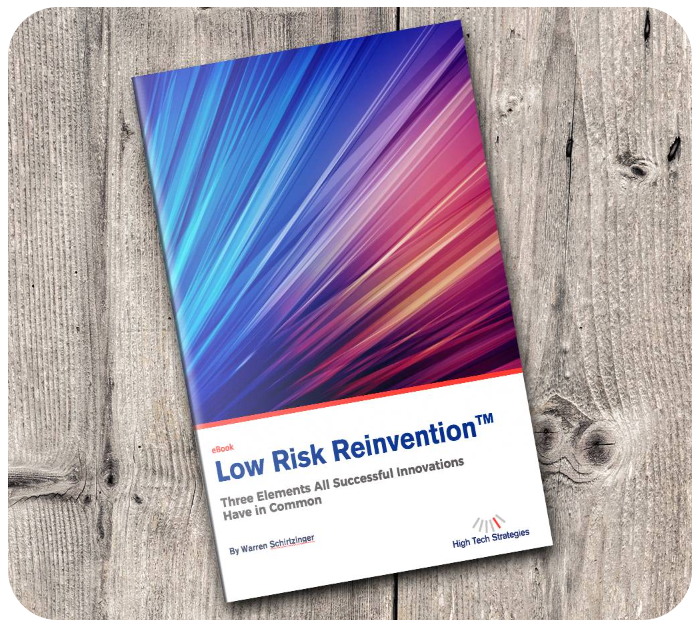
Inside this leadership position playbook, you’ll learn about the critical elements prospective buyers evaluate before buying your product or service:
- Affinity with the end user – Does your product feel familiar to the end user and is it compatible with their current systems and methods?
- Your reputation and track record – Does the customer see you as a reference source or expert/counselor in their industry?
- Technical and domain expertise – Do you contribute to the evolution and success of the market category you’re in?
- Industry standards – Do you adhere to industry standards that similar vendors work to support?
- Unbiased information and support – Are you facilitating peer-to-peer conversations and word-of-mouth references from people the customer knows and trusts?
These buyer requirements prove that human beings are physiologically wired to avoid loss before they pursue gain, when evaluating the possible purchase or use of a new product. And without elements of loss prevention, an innovation will never be widely adopted.
Prospective customers and buying committees are not only asking, “Who are you?”
They’re asking:
 How do we know you’ll still be in this space in a year from now?
Which companies in our industry use your product with positive results?
How will your product impact the way I/we work?
Will you provide a projection of the economic return we will receive?
This framework shows you how buyers actually evaluate products before buying and the factors that worry customers the most.
Schirtzinger Road Podcast
In this engaging podcast, Warren shares his extensive knowledge on how businesses can reduce perceived risks to increase the adoption of new innovations. This discussion spans from historical examples, like Thomas Edison’s lightbulb and the automobile revolution, to modern scenarios including the iPhone and Amazon.
Warren highlights three critical elements for successful innovation: end-user harmony, reliability, and safety in numbers. Listeners get in-depth insights into how companies like Amazon started with low-risk products like books and gradually expanded their offerings.
Chris and Warren explore case studies such as the unprecedented success of Vermont’s COVID vaccination program, the rise of Uber, and innovative guarantees that boost consumer confidence. This hour-long conversation is packed with valuable advice for entrepreneurs, business leaders, and anyone interested in understanding how to drive acceptance and adoption of new products and ideas.
Key Takeaways:
- End-User Harmony: Understanding and aligning with the end-user’s needs is crucial for innovation success.
- Reliability and Commitment: Demonstrating long-term commitment and reliability can significantly reduce the perceived risks of new products.
- Safety in Numbers: Innovations adopted in a social or community context have higher chances of success.
- Examples of Success: Case studies like the transition from gas lamps to electric light bulbs and Vermont’s COVID vaccination program illustrate successful risk reduction strategies.
- Stage-Based Innovation: Gradual rollouts and stage-based changes are more effective than sudden overhauls in gaining user adoption.
Notable Quotes:
“People don’t just jump on new things. In fact, they actually resist change.”
“The most successful companies, the founder is the customer.”
“Safety in numbers is a full 33% of the total risk reduction.”
“Try before you buy is one of the biggest elements of end-user harmony.”
“Amazon began with books because they were ultra-low risk, well understood, and had an established ecosystem.”